
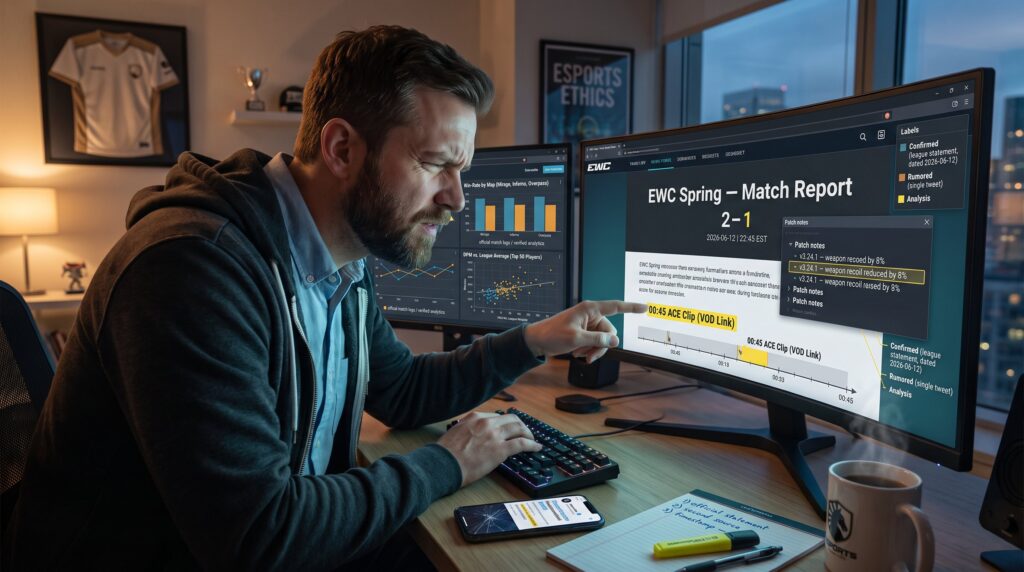
What to Look for in Competitive Gaming News starts with one simple rule: trust sources that prove their claims. In 2026 the scene moves fast, rosters change, patches land, and formats shift within hours. A reader should expect clear labels (confirmed, rumored, analysis), named sources, dates, and exact match details. This guide explains what matters in match reports, stats, player moves, patches, business shifts, and breaking items so readers and hobbyists spot fact from noise. It favors official confirmations, contextual data, and reporting that shows its work, not just headlines.
Key Takeaways
- Trust competitive gaming news sources that provide confirmed information with clear labels, named sources, and exact match details.
- Quality match coverage includes precise scorelines, tournament context, pivotal moments, and links to match VODs for verification.
- Reliable stats and analysis pair raw data with context, citing official logs and explaining metrics to interpret player and team performance.
- Verified transfer and contract news requires at least two trusted sources, with detailed player profiles including data and human factors for deeper insight.
- Patch notes and meta changes must be reported with exact version numbers and official quotes to explain their impact on gameplay and strategy.
- Business and tournament format reporting should present clear prize pool splits, qualification rules, and cite official filings to clarify scene dynamics and fairness.
- Breaking news needs verification through multiple official or independent sources before acceptance, and rumors must be clearly labeled as such to maintain trust.
Why Source Credibility Matters (Writers, Outlets, And Verification Practices)
Fact first: source credibility decides whether a story is useful or harmful. Readers should prefer outlets that cite league statements, verified team posts, or named quotes over anonymous social posts.
Credible outlets list exact events, patch versions, and timestamps. They separate news from opinion and label unconfirmed claims. For example, a reliable match report will name the tournament (EWC Spring), the phase (upper-bracket final), and the exact map pool rather than saying “big event.” That clarity lets readers check broadcasts or VODs later.
Verification practices matter. Good reporters confirm sensitive claims, transfers or contract terms, with at least two independent sources or an official statement. Unfgaming’s pillar resource for community and reporting basics appears in this context, and hobbyists can cross-check site guidance with core resources.
Warning: social posts can be useful leads but are low reliability until verified. When outlets attribute a claim solely to a tweet, readers should treat it as a tip, not a fact. Practical signposts of quality: named author bios, correction logs, and clear sourcing for exclusive claims.
What To Expect From Match Coverage (Scorelines, Context, And Storytelling)
Answer first: match coverage should deliver scorelines, bracket impact, and the why behind the result. A headline alone, “Team X beats Team Y”, is not enough.
Good match reports open with the score and stakes: 2–1 in a best-of-three that secured a top-seed spot matters differently than the same result in round one. Readers want the exact scoreline, game time, and critical moments (a 45-second ace or a late comeback). Those moments explain momentum swings and future implications.
Context is key. Coverage should connect the match to standings, qualification paths, and the meta. If a team won using an off-meta strategy, the article should name the patch version and show how the choice altered the game. That is where narrative meets utility: fans remember a clutch play and also learn why it changes bracket odds.
Practical tip: quality outlets link to the match VOD and provide a short timeline of pivotal plays, allowing readers to verify claims quickly. For more on how fan engagement has shifted alongside coverage styles, consult writing about esports growth.
Stats, Analysis, And How To Interpret Postmatch Data
Clear answer: raw stats tell what happened: interpretation tells what it means. Readers should expect numbers plus context.
Reliable postmatch data uses official match logs, broadcast VODs, or vetted analytics platforms. For example, stating that a player had 28 kills is useful only when paired with rounds played, economy swings, and opponent strength. Reporters should note sample size: a single standout game is not proof of a season-long trend.
How to read numbers: compare per-round metrics, win rates on specific maps, and damage per minute against league averages. If an outlet claims “Player A is the best,” it should show a metric that beats at least two independent datasets or cite a recognized analytics source. In 2026, viewers expect interactive charts or links to underlying logs so they can test claims themselves.
Caveat: analytics tools have biases. Some rank scoreboards by kills, others by objective control. Trust pieces that explain the metric used and its limitations. For deeper reading on genres and performance patterns, see material on esports game genres.
Player And Team Reporting: Transfers, Contracts, And Profile Pieces
Direct fact: transfer news must be verified by at least two sources or an official announcement before it is called confirmed. Teams sometimes leak terms: journalists must show proof.
Good reporting lists the contract status, buyout figures when public, and the players’ recent form. For example: “GuardiaN signed a one-year deal, reported by two league insiders, after recording a 1.22 rating across 24 maps.” That level of detail helps readers judge the move’s impact.
Profiles should show both data and character. A strong profile might note a player’s climb from open qualifiers to a pro roster, include exact dates, and quote teammates on practice habits. Vulnerable moments matter: mention when a player missed a tournament due to burnout or an immigration delay, those human details explain form dips.
Practical warning: anonymous “sources close to the team” can be real but unreliable. Quality outlets name roles (team rep, agent) and timestamp confirmations. For safe community entry and reporting ethics, writers and readers can reference tips in joining communities safely.
Patch Notes, Meta Changes, And Why Developer Updates Matter To Coverage
Key point: developer updates change competitive play and must be tracked precisely. Coverage should cite exact patch numbers and release times.
A headline like “Meta shift benefits team X” is weak without the patch ID and the specific nerf or buff. Good articles quote the official patch note line (for example, “weapon recoil reduced by 8% in v3.24.1”) and show how pro picks shifted across the next five matches.
Journalists should watch official dev channels and label early balance notes as “testing” or “live.” Reporting on experimental servers requires clear labeling. When a patch causes immediate competitive shifts, say a 15% drop in a champion’s win rate, coverage should use a combination of official logs and tournament data to support that claim.
If readers want regular summaries that link patch effects to playstyles, community guides and rule pages often track those trends: a related piece on community guidelines explains how developer messaging and community reaction interact.
Business, Tournament Formats, And Prize Pools — What Impacts The Scene
Core fact: tournament format and money shape player choices and competitive fairness. Coverage should state format (round robin, GSL, double elimination), qualification paths, and exact prize-pool splits.
Readers need precise numbers. For example, a $1,000,000 prize pool with 50% to the winner vs. equal split across top eight changes team incentives and roster stability. Coverage should list qualification rules and revenue-sharing models when available. That helps hobbyists understand why teams prioritize certain events.
Business reporting must cite official filings, league rulebooks, or public statements. Claims about franchise fees or league revenue need a source. When stating industry trends, the article may reference broader reporting on the market: one useful verification page covers industry shifts and can put prize-pool trends in context industry analysis.
Practical note: format changes often arrive with little fanfare. Readers should follow official tournament pages and reputable beat reporters to avoid being blindsided by sudden rule shifts. For context on how communities shape these events over time, see historical notes on The Evolution of.
How To Verify Breaking News And Avoid Rumors
Start with the answer: verify with official sources and at least one independent outlet before treating breaking items as true.
Steps that work: check league or team statements, look for named quotes with timestamps, and compare against broadcast VODs or match logs. If a claim involves money or contracts, wait for documentation or multiple insiders. A single anonymous leak should be flagged as unconfirmed.
Practical checklist: 1) find an official tweet or statement, 2) locate a second independent confirmation, 3) confirm timestamps, and 4) watch for corrections. If none of these items exist, label the item rumor.
Readers should also use community tools and pillar resources to track trusted reporters and archives. For example, Unfgaming’s guides and community resources help hobbyists set up reliable feeds and avoid echo chambers: see related material on community safety and reporting practices in the site’s broader posts collection.