
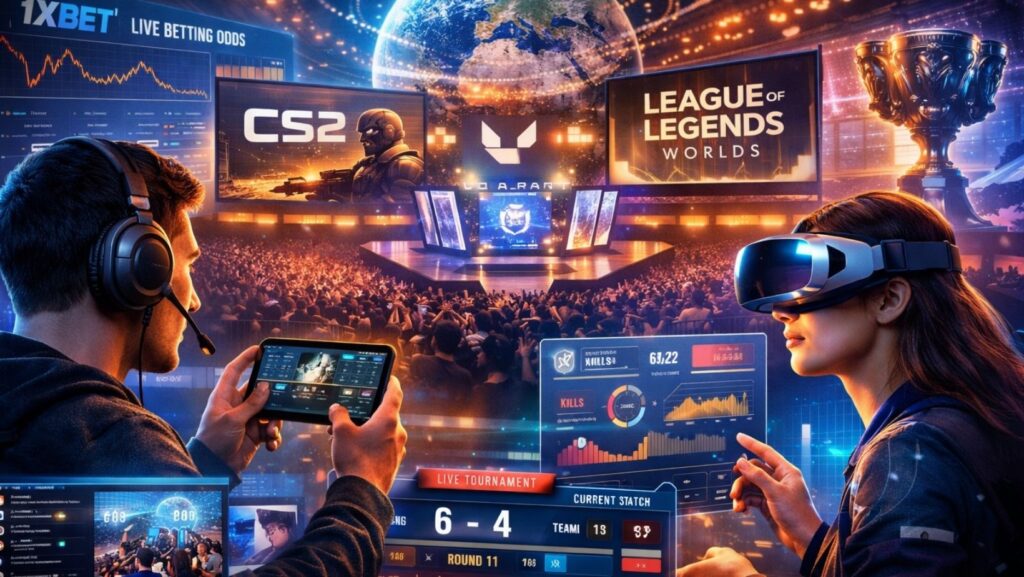
Esports is no longer a niche corner of gaming culture — it has become a global entertainment industry with structured leagues, massive audiences, and growing commercial ecosystems. In 2025–2026, the biggest shift isn’t just in viewership numbers, but in how fans interact with live matches, data, and competitive environments in real time.
From sold-out arenas to millions of concurrent online viewers, esports now rivals traditional sports in both scale and engagement, with fans increasingly drawn to real-time data and interactive experiences—similar to the fast-paced dynamics seen on platforms like f1 betting 1xbet, where live updates and instant decisions play a central role.
Viewership and Major Titles Continue to Lead Growth
Top-tier titles like Counter-Strike 2 and League of Legends remain at the center of the esports ecosystem. Events such as the League of Legends World Championship and CS2 Majors regularly attract peak viewership in the millions. According to data from Esports Charts, several major tournaments in 2025 surpassed previous records for concurrent viewers, confirming sustained audience growth.
This expansion is supported by structured seasonal formats. Riot Games continues to refine its international calendar, while Valve-backed events in Counter-Strike maintain open competition formats that keep new teams in circulation.
At the same time, newer titles are gaining traction. Games like Valorant have built strong competitive scenes, with franchised leagues such as the VCT (Valorant Champions Tour) attracting consistent global audiences.
Streaming platforms also play a central role. Twitch and YouTube Gaming continue to dominate live esports broadcasting, with average watch times often exceeding one hour per session.
Real-Time Data Is Changing the Viewing Experience
One of the most noticeable changes in esports is the integration of real-time data into broadcasts and fan platforms. Live statistics — including player performance, economy tracking, and map control — are now standard features across major events.
For example, in Counter-Strike 2, viewers can track utility usage, damage output, and clutch success rates instantly. In League of Legends, gold differentials, objective control, and vision scores provide deeper context beyond kills and deaths.
This data-driven environment has changed how fans follow matches. Instead of passively watching, audiences actively analyze strategies, predict outcomes, and compare player efficiency throughout a game.

Platforms offering extended features — including match tracking and interactive dashboards — have grown alongside this trend. Some digital ecosystems, including services like 1xbet, have expanded their esports sections to reflect the demand for real-time engagement, although the primary driver remains the data-rich viewing experience itself rather than wagering alone.
Mobile and Global Access Drive Engagement
Mobile access continues to be a key factor in esports growth. A significant share of viewers now watch matches through smartphones, especially in regions such as Southeast Asia, Eastern Europe, and Latin America.
This shift has influenced how tournaments are produced. Broadcasts are optimized for smaller screens, with simplified overlays and clearer stat displays. Social media integration also plays a role, with highlights and key moments spreading instantly across platforms.
At the same time, global accessibility has improved. Major tournaments are now streamed in multiple languages, with regional casters and localized content helping expand audiences beyond traditional markets.
Integrity, Regulation, and Transparency
As esports grows, so does the need for integrity systems and transparent governance. Organizations like ESIC work to monitor match-fixing, betting-related risks, and competitive fairness.
Publishers and tournament organizers have also introduced stricter rules around player conduct, data usage, and third-party involvement. Riot Games, for example, enforces tight controls over its franchised leagues, while Valve continues to refine its policies around tournament operations.
These measures aim to protect both players and audiences as the industry expands. With more money entering esports through sponsorships, media rights, and partnerships, maintaining trust is becoming increasingly important.
Industry Outlook: More Structure, More Competition
Looking ahead, esports is expected to become even more structured. Franchise leagues, long-term team investments, and stable seasonal formats are shaping a more predictable competitive environment.
At the same time, competition between titles remains intense. Established games must continue updating content and formats to retain audiences, while newer titles aim to break into the top tier of esports relevance.
Investment in infrastructure is also increasing. Dedicated arenas, training facilities, and analytics tools are becoming standard for top organizations. This professionalization mirrors traditional sports and reinforces esports as a long-term industry rather than a passing trend.
The Bigger Picture
Esports today is defined by interaction. Fans don’t just watch — they analyze, discuss, and engage with matches in real time. Data, accessibility, and global connectivity have transformed competitive gaming into a fully interactive experience.
While adjacent industries continue to develop around esports, the core appeal remains unchanged: high-level competition, constant innovation, and a rapidly growing global community.
As new technologies and formats emerge, the way people experience esports will keep shifting. But one thing is clear — competitive gaming is no longer just part of the entertainment landscape. It is shaping it.