
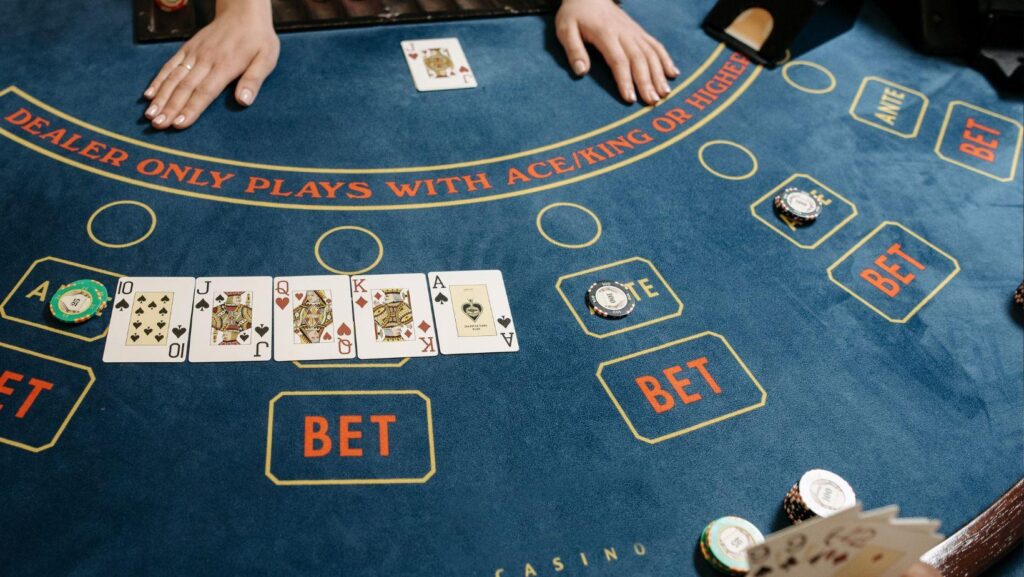
When economists Steven Levitt and Thomas Miles analyzed the 2010 World Series of Poker, they found that players identified as highly skilled before the event posted an average return on investment above 30 percent, while everyone else averaged minus 15 percent. The study, published by the National Bureau of Economic Research, settled an old argument: poker is a skill game wearing a luck costume. That matters for gamers, because the specific skills that separate winning poker players from losing ones look suspiciously similar to the ones that separate Immortal-ranked players from the rest of the ladder.
Not all of them transfer cleanly, though. Some poker habits will actively hurt your ranked climb. Here's how to tell the difference.
Thinking in ranges, not certainties
A strong poker player never puts an opponent on one exact hand. They assign a range of possible holdings and narrow it street by street as new information arrives. A raise from early position means one set of hands. A check on a dangerous board means another.
This is exactly how high-level Counter-Strike and Valorant players process information. You don't know the enemy AWPer is holding mid. You know that based on the economy, the round timer, and their last three rotations, there's maybe a 60 percent chance they are. You play the percentage, and you update the moment you get a new sound cue. Players stuck in lower ranks tend to commit to a single read ("he's definitely B") and refuse to revise it. Range thinking is the single most valuable habit poker can teach a competitive gamer.
Bankroll management becomes resource management
Poker players who survive long-term treat their bankroll as the tool of the trade. They never put so much on one table that a bad night ends their career. The gaming equivalent shows up everywhere: ult economy in Overwatch, buy rounds in CS2, gold leads in Dota 2. The discipline is the same, which is to spend from a position where one bad outcome doesn't cripple you.
Where players actually build this discipline varies a lot by geography. In states like New Jersey, Michigan, and Pennsylvania, regulated online poker rooms give players a legal place to practice low-stakes bankroll control. Missouri sits in a different spot. Sports betting went live there following the Amendment 2 vote, but regulated online casino play hasn't, so players in the state work with offshore platforms instead. A recent review of Missouri online casinos found several of them running poker and casino games from a single wallet, with payout speed the biggest gap between platforms. That's its own kind of bankroll lesson: money you can't access quickly isn't really managed.
Tilt control transfers, and it's the hard one
Every poker player knows the spiral. You get unlucky on a big pot, and ten minutes later you're making calls you'd never make with a clear head. Esports has the identical failure mode. You lose a winnable game to a throw, queue again immediately, and play three more games of progressively worse decision-making.
A recent look at the shared psychology behind esports tournaments and casino sessions made the point that both environments hammer players with variance they can't control, and the winners are the ones who respond to outcomes without absorbing them emotionally. The poker world's solution is procedural: stop-loss rules, mandatory breaks after big losses, session reviews done the next day rather than in the heat of the moment. Steal all of it. A hard rule like "two losses in a row means a 20-minute break" will do more for your rank than another aim-training session.
What doesn't transfer
Patience, oddly enough, is where the disciplines split. Winning poker is mostly folding. You wait, sometimes for hours, for spots where the math clearly favors you. Carry that instinct into a fighting game or a fast-paced shooter and you become passive, predictable, and easy to pressure. Competitive games reward initiative in a way poker rarely does, because in most esports titles the player forcing the action sets the tempo and the terms.
Bluffing translates poorly too. A poker bluff works because your opponent only sees your bets. In a game with full visual information, fake rotations and shoulder peeks exist, but they're seasoning rather than strategy. Players who try to win esports matches primarily through deception usually just lose to fundamentals.
The last trap is results-oriented thinking in reverse. Poker forces you to accept that a correct decision can lose money, and that's healthy. But some players take it too far and use variance as a shield, blaming every loss on bad luck or bad teammates. The NBER numbers cut both ways. If skill produces a 45-point ROI gap over a large sample, then your rank over a few hundred games is also mostly a skill signal, not a coin-flip record.
The overlap, in the end, comes down to one sentence: both games punish people who confuse outcomes with decisions. Learn to grade your choices independently of your results, whether the scoreboard shows a bad beat or a 0-10 lane, and the rating takes care of itself.