
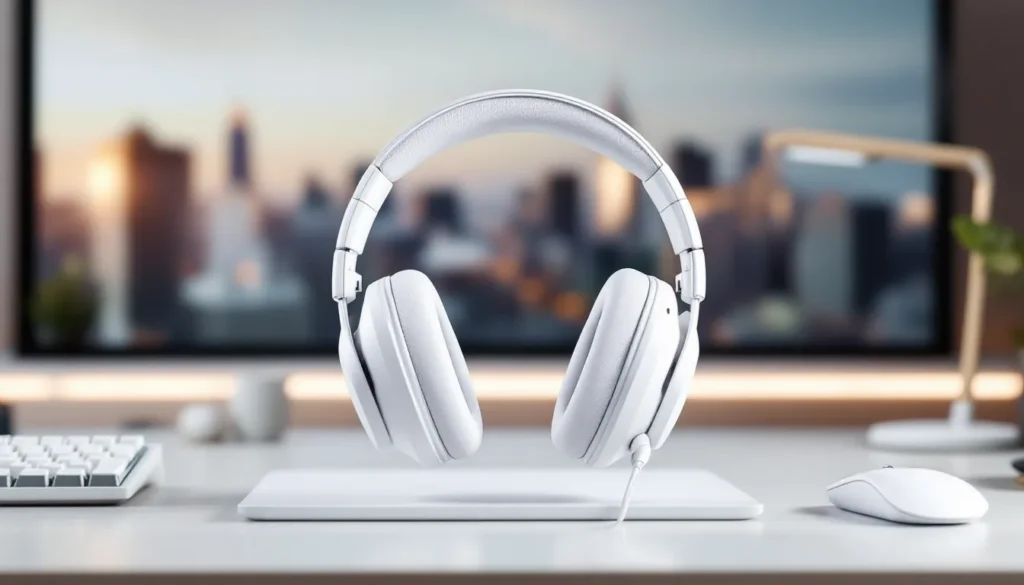
A white gaming headset might seem like a purely cosmetic choice, but there’s more going on under that clean aesthetic than you’d think. Whether you’re building a minimalist gaming setup, coordinating with white peripherals, or just tired of the standard black-and-RGB overload, white gaming headsets have become a legitimate category worth exploring. The thing is, color shouldn’t compromise sound quality, and in 2026, manufacturers finally understand that. This guide breaks down everything you need to know to find a white gaming headset that actually performs, fits your budget, and works across all your gaming platforms.
Key Takeaways
- Modern white gaming headsets deliver the same audio performance as black equivalents—color is a finish choice, not a performance compromise.
- A white gaming headset in the $80–$180 mid-range price tier offers the best value for serious gamers, with improved durability, comfort for 6+ hour sessions, and reliable build quality.
- Wireless 2.4GHz USB dongle connections are ideal for gaming across multiple spaces and tournaments, while wired white gaming headsets eliminate battery concerns for competitive players prioritizing latency certainty.
- Comfort and audio quality must take priority over aesthetics—test your white gaming headset during your longest typical gaming session to ensure it suits your specific game types and head shape.
- Key features worth evaluating include driver size (40–50mm), unidirectional microphones with noise gating, cross-platform compatibility (PC, PlayStation, Xbox, mobile), and passive sound isolation for competitive gaming.
- Avoid brands with unproven gaming audio credentials and RGB lighting that overshadows audio performance—focus on driver quality, frequency response, and microphone clarity as the foundation for any white gaming headset purchase.
Why White Gaming Headsets Are Worth Considering
Aesthetic Appeal and Setup Compatibility
Let’s be real: setup aesthetics matter. If you’ve invested in a white keyboard, white desk, or white monitor, a black headset sticks out like a sore thumb. White gaming headsets solve that problem without sacrificing audio quality. They create visual cohesion in your gaming space, which sounds superficial until you realize how much a unified aesthetic affects your mood and focus during long gaming sessions.
Beyond pure matching, white headsets work with nearly any color scheme. They complement minimalist setups, esports-focused battlestations, and even gaming rooms with accent lighting. If you’ve got a white chair, white case lighting, or white peripherals, a white headset ties the whole look together. This compatibility extends to both professional streaming setups and casual home gaming environments.
The resurgence of white gaming gear reflects a broader trend toward cleaner, more intentional aesthetics in gaming spaces. Streamers and content creators have caught on, white headsets photograph better, look more professional on camera, and stand out in an ocean of RGB gamer setups.
Performance and Audio Quality Expectations
The biggest misconception about white gaming headsets is that they sacrifice performance for aesthetics. That’s outdated thinking. Modern manufacturers apply the same driver technology, acoustic engineering, and sound profiles to white models as they do black ones. The color is a finish choice, not a performance compromise.
That said, audio quality still varies wildly across brands and price points. A cheap white headset won’t magically sound better than a cheap black one. What matters is the drivers, frequency response, and whether the headset is tuned for gaming (emphasizing spatial audio, high-frequency clarity, and mid-range punch) or music production (which prioritizes flat response across all frequencies).
When shopping for a white gaming headset, expect the same performance benchmarks as any other headset in its price range: directional audio clarity for competitive shooters, booming bass for immersive single-player games, and crystal-clear voice communication for team-based titles. Sound isolation and ambient noise rejection matter just as much on a white model as any other.
Key Features to Look For in a White Gaming Headset
Audio Technology and Sound Profile
The driver size typically ranges from 40mm to 50mm in gaming headsets. Larger drivers generally handle lower frequencies better, but 40mm drivers are more than adequate for competitive gaming where clarity and directional audio matter more than bass punch. Check the frequency response range, anything from 20Hz to 20kHz covers the full spectrum of human hearing, but gaming headsets often emphasize the 100Hz–8kHz range where footsteps, gunfire, and voice communication sit.
Look for passive soundstage rather than artificial surround sound processing if you’re playing competitive shooters. Dolby Atmos and Windows Sonic can work, but some gamers prefer the natural imaging that comes from well-tuned stereo audio. For immersive single-player games like RPGs or horror titles, active spatial audio processing creates a more enveloping experience.
Impedance affects how loud a headset gets and how much power your audio device needs to deliver. Most gaming headsets sit between 16–32 ohms, which works with any gaming device without additional amplification. Lower impedance (easier to drive) is generally better for portable gaming and console use.
Comfort and Build Quality
You’ll wear gaming headsets for 4–8 hour sessions, sometimes longer during tournaments or marathon gaming nights. Ear cup padding material matters, synthetic leather holds up better than mesh, but can trap heat. Memory foam adapts to your head shape over time. Clamping force needs to be firm enough to stay in place during movement but not so tight it causes fatigue or headaches.
Headband design determines whether glasses-wearing gamers (yes, we exist) can wear these comfortably. Adjustable headbands with extension arms work better than fixed designs. Weight distribution is critical, if all the weight sits on the ear cups, you’ll feel pressure. Well-designed headsets distribute weight across the headband and ear area.
Cable routing on wired headsets affects movement. Hidden cable channels in the headband look cleaner and prevent snagging. Detachable cables are a bonus if you need to swap between platforms or do quick cleanups.
Microphone Quality and Noise Cancellation
Here’s where white gaming headsets often compete directly with more expensive models. A good gaming microphone doesn’t need to be studio-quality, it just needs to cut through team communication clearly without picking up every keystroke, mouse click, or ambient room noise.
Unidirectional microphones (cardioid pattern) reject side and rear noise better than omnidirectional ones. Microphone sensitivity should be adjustable in software if the headset connects to your PC. Noise gating automatically mutes the mic when you’re not talking, which prevents constant background hum from reaching teammates.
Active noise cancellation (ANC) on a gaming headset is nice but not essential for gaming, you need to hear game audio, not block it out. Passive isolation through ear cup design is more practical. But, if you’ll use the headset for work calls or video meetings, ANC becomes valuable.
Connectivity and Compatibility
Wireless headsets use either 2.4GHz USB dongles (lowest latency for gaming) or Bluetooth (less latency-sensitive, more convenience). USB dongle connections typically add 1–4ms of latency, which is negligible for most games but matters in ultra-competitive titles like Valorant or Counter-Strike 2 where every millisecond counts.
Multipoint Bluetooth lets you connect to multiple devices simultaneously, your PC and phone, for example. This is convenient if you game on different platforms. Wired headsets eliminate latency concerns but tether you to a desk or console.
Battery life on wireless headsets matters. Expect 20–50 hours on modern gaming headsets, which should cover a week of normal use. Charging time ranges from 2–4 hours. Check whether the headset has a low-battery warning in the audio stream.
Cross-platform compatibility varies. Some white gaming headsets work with PC, PlayStation, and Xbox out of the box. Others need separate dongles or adapters. Mobile gaming support (iOS and Android) is becoming standard but still worth confirming before purchase.
Types of White Gaming Headsets: Which Style Fits Your Needs
Wireless White Gaming Headsets
Wireless white gaming headsets dominate the market in 2026 because they offer freedom of movement without the audio penalty of previous generations. USB 2.4GHz dongles deliver the fastest response times for competitive gaming. Most players won’t perceive any latency difference compared to wired, but FPS pros sometimes prefer wired for absolute certainty.
The trade-off is battery management. You’ll charge every 10–20 hours of active use, depending on the model. Some headsets can operate while charging, so a tethered charger isn’t as restrictive as being fully plugged in. Look for LED indicators that show battery status, and avoid models that drain the battery in under 15 hours.
Wireless white gaming headsets shine in esports tournaments where wired cables can snag on desks or tournament equipment. They’re also perfect if you game across multiple spaces, couch gaming, bed streaming, or swapping between desk setups.
Wired White Gaming Headsets
Wired white gaming headsets eliminate batteries entirely, making them ideal for ultra-competitive play where any latency question is off the table. They’re also cheaper on average because manufacturers skip the wireless circuitry, battery, and charging infrastructure.
The downside is obvious: cables tether you to your desk or console. Cable length matters, most gaming headsets come with 1.5–2 meter cables, which works for standard desk setups but feels short if you game from a couch or want to stand and stretch. Extension cables are cheap solutions, but adding hardware clutters your setup.
Wired white gaming headsets are underrated for minimalist setups. Without battery anxiety, they require zero maintenance beyond occasional cleaning. If you game exclusively at a desk and don’t move between devices, wired is simpler and often cheaper.
RGB and Customizable White Headsets
RGB lighting on white gaming headsets creates a striking visual effect. The white finish acts as a diffuser for RGB, making light effects more visible than on black headsets. This appeals to streamers and gamers who enjoy theming their setups around specific games or color schemes.
Some white gaming headsets include customizable RGB software integration with popular gaming platforms. You can sync lighting to in-game events, match your other RGB peripherals, or create static color profiles. This is pure aesthetics, it doesn’t affect sound quality, but for some gamers, it’s a major draw.
Note that RGB adds cost and occasionally introduces reliability issues with the lighting controller. If you don’t care about lighting, you’ll save money and avoid potential software headaches. Pure white headsets without RGB are simpler and equally effective for gaming.
Platform Compatibility: PC, Console, and Mobile
PC Gaming Setup Integration
PC gaming headsets have the most flexibility because modern PCs support USB, 3.5mm, Bluetooth, and wireless dongles. A white gaming headset purchased for PC will likely work on your console too, but confirm the connection type before buying.
USB audio interfaces on headsets work with PCs but not with PlayStation or Xbox without adapters. 3.5mm jack connections are universally compatible but increasingly rare on modern headsets. The guide to choosing high-quality PC gaming headphones covers platform-specific performance considerations in detail.
PC gaming also benefits from spatial audio software like Dolby Atmos or DTS:X, which some white gaming headsets support. These create convincing 3D soundscapes for immersive games like Starfield or Baldur’s Gate 3. But, spatial audio is optional, good stereo imaging works just as well for competitive shooters.
Console Gaming Headsets
PlayStation 5 and Xbox Series X both support USB, 3.5mm, and wireless 2.4GHz dongles. Most modern white gaming headsets work on both consoles simultaneously, making them genuinely multi-platform.
Console gaming emphasizes party chat clarity and immersive single-player audio. A white gaming headset optimized for console play typically has a balanced frequency response (not too treble-heavy) and clear voice reproduction. The same headset works for Fortnite squad callouts and Final Fantasy XVI’s orchestral soundtrack.
Nintendo Switch compatibility is more limited. Most USB headsets don’t work natively on Switch. Bluetooth options exist but suffer from slightly higher latency. If you game on Switch, confirm wireless dongle or 3.5mm compatibility before buying.
Mobile Gaming Considerations
Mobile gaming with a headset seems niche, but mobile titles have evolved beyond puzzle games. Games like Genshin Impact, Honkai: Star Rail, and Call of Duty: Mobile benefit from proper audio. Most white gaming headsets work with iOS and Android via Bluetooth, though some older models have connection stability issues.
For mobile gaming, battery life becomes more important because your phone or tablet can’t charge a tethered headset. Wireless headsets with 25+ hour battery life are ideal. Folding designs that fit in backpacks matter if you travel with your headset.
Portability also affects your choice. A full-sized over-ear white gaming headset is bulky for portable gaming. Some manufacturers produce compact white gaming headsets specifically for mobile, though these compromise on comfort and audio quality compared to full-sized models.
Price Ranges and Budget Considerations
Budget-Friendly Options
Quality white gaming headsets start around $50–$80. At this price point, you’re trading premium materials and advanced features for solid fundamentals: working audio drivers, usable microphones, and decent comfort for 2–3 hour sessions. Battery life on wireless budget models tends to be shorter (15–20 hours), and build quality feels less durable long-term.
Budget white gaming headsets suit casual gamers who don’t play competitively and don’t demand perfect audio quality. They work fine for team games, single-player campaigns, and streaming to small audiences. The risk is that cheaper models sometimes have reliability issues, creaky headbands, driver failures, or microphone problems appearing after 6 months of use.
If you’re testing whether a white gaming headset fits your setup before committing to premium options, budget models are reasonable experiments. Just expect to potentially upgrade within a year or two.
Mid-Range White Headsets
The $80–$180 range offers the best value in gaming headsets. Here’s where white gaming headsets truly compete with black equivalents without compromise. You get solid audio engineering, durable materials, reliable build quality, and comfort for 6+ hour sessions. Battery life on wireless models extends to 25–40 hours, and microphones actually reject background noise effectively.
Mid-range white gaming headsets are the popular choice for serious gamers, streamers, and esports hobbyists. Performance improvements over budget models are significant, drivers sound crisper, soundstage feels wider, and microphones pick up clean voice communication. Many streamers use mid-range headsets because the quality-to-price ratio is unbeatable.
This is where most gamers should shop unless budget constraints are severe or you need professional-grade equipment for tournament play.
Premium and Professional-Grade Headsets
Premium white gaming headsets ($180–$400+) target serious competitors, professional streamers, and gamers who demand the absolute best audio experience. These models feature premium driver engineering, audiophile-grade components, and materials like aircraft-grade aluminum and premium leather.
Professional-grade white gaming headsets are rare, most premium options come in black because that’s what esports organizations and studios traditionally favor. But, premium white models exist from brands that understand the demand for clean aesthetics in streaming setups.
Unless you’re earning money from gaming or competing at the highest amateur levels, premium pricing is probably overkill. Mid-range white gaming headsets deliver 85–90% of the performance at half the cost. That said, if you use your headset 10+ hours daily, premium comfort and durability justify the investment.
What to Avoid When Choosing a White Gaming Headset
Common Pitfalls and Misconceptions
Don’t assume white finishes are fragile or stain easily. Modern white gaming headsets use durable synthetic materials that resist discoloration. A year of regular use won’t turn your white headset dingy, just occasional cleaning with a microfiber cloth keeps them pristine.
Avoid brands with no proven track record in gaming audio. Some manufacturers slap “gaming” labels on consumer headsets and jack up the price. Check reviews on PCMag or RTINGS before buying from lesser-known brands. Gaming headset reviews reveal whether microphones actually work, whether comfort holds up over time, and whether audio quality matches the price.
Don’t prioritize RGB lighting over actual audio performance. A white gaming headset with fancy lighting but mediocre drivers is worse than a plain white headset with excellent sound. RGB is the cherry on top, not the foundation.
Wireless latency panic is often unfounded. Modern 2.4GHz wireless headsets deliver imperceptibly low latency for 99.9% of gamers. Only ultra-competitive esports players at the highest levels benefit from wired audio. If you’re not competing professionally, wireless convenience outweighs wired latency benefits.
Don’t overlook fitting and comfort. White gaming headsets, like all headsets, vary in clamping force, ear cup depth, and headband pressure. A headset that fits your friend perfectly might cause fatigue on your head shape. Prioritize comfort because audio quality means nothing if you can’t wear the headset for more than an hour.
Avoid assuming all wireless headsets drain batteries equally. Battery life varies from 15 to 60+ hours depending on drivers, wireless protocol, and power efficiency. Check manufacturer specs and TechRadar’s battery testing before assuming a wireless white headset will drain overnight.
Don’t buy white gaming headsets solely because they match your desk. If the audio doesn’t suit your gaming style, too bass-heavy for competitive shooters, too treble-heavy for casual play, no amount of aesthetic appeal fixes it. Sound signature matters more than color.
How to Test Before Buying
Buy from retailers with solid return policies. Most major electronics retailers offer 14–30 day returns without questions asked. Use this window to test audio quality, comfort, and compatibility with your specific games and devices.
Test competitive game audio first. Boot up a shooter like Valorant or Counter-Strike 2 and confirm directional audio feels natural. Can you pinpoint footstep direction without thinking? Does your microphone transmit clear voice communication without feedback?
Test immersive game audio next. Play a single-player title with environmental audio, Starfield, Baldur’s Gate 3, or even a horror game like Alan Wake 2. Does the soundscape feel immersive or flat? Does the white gaming headset enhance the experience or fade into the background?
Wear the headset for your longest typical gaming session. An 8-hour session reveals comfort issues that 30 minutes won’t. If the headset causes ear fatigue, pressure points, or sweat accumulation after 4 hours, it’s not the right fit regardless of other features.
Test the microphone during team play. Jump into multiplayer matches and ask teammates whether your voice comes through clearly. Confirm the mic doesn’t pick up keyboard/mouse noise, and verify that noise cancellation works if the headset includes it.
Test wireless connectivity across your home. Move between rooms, walk between your PC and other areas, and confirm the connection stays stable. Wireless dropouts ruin gaming and streaming, so stability during movement matters more than maximum range.
Compare with a wired headset temporarily if you’re upgrading from wired audio. Sometimes the psychological difference between wired and wireless matters more than actual latency. A week of testing reveals whether wireless feels right for your gaming style. Some gamers genuinely prefer wired even though the cable hassle, and that’s a valid preference that testing uncovers. If you’re looking to elevate your gaming setup overall, try the white gaming headset in context with your whole battlestation to ensure aesthetic and functional cohesion.
Conclusion
White gaming headsets are no longer a compromise between aesthetics and performance. In 2026, you can find white gaming headsets that sound as good as any black equivalent while creating the clean, professional look that modern gaming setups demand.
The key is matching the headset to your specific needs: wireless for freedom of movement, wired for latency certainty, mid-range for value, premium for comfort during marathon sessions. Test before committing, prioritize comfort and audio quality over styling, and remember that RGB lighting is optional eye candy, not a performance feature.
Whether you’re building a minimalist streaming setup or simply tired of black peripherals cluttering your desk, a quality white gaming headset delivers real audio performance backed by genuine engineering, not just a paint job. The gaming peripheral market has matured enough that form and function genuinely coexist. Pick one that fits your budget, sounds right for your games, and feels comfortable for your longest sessions. Everything else is bonus.