
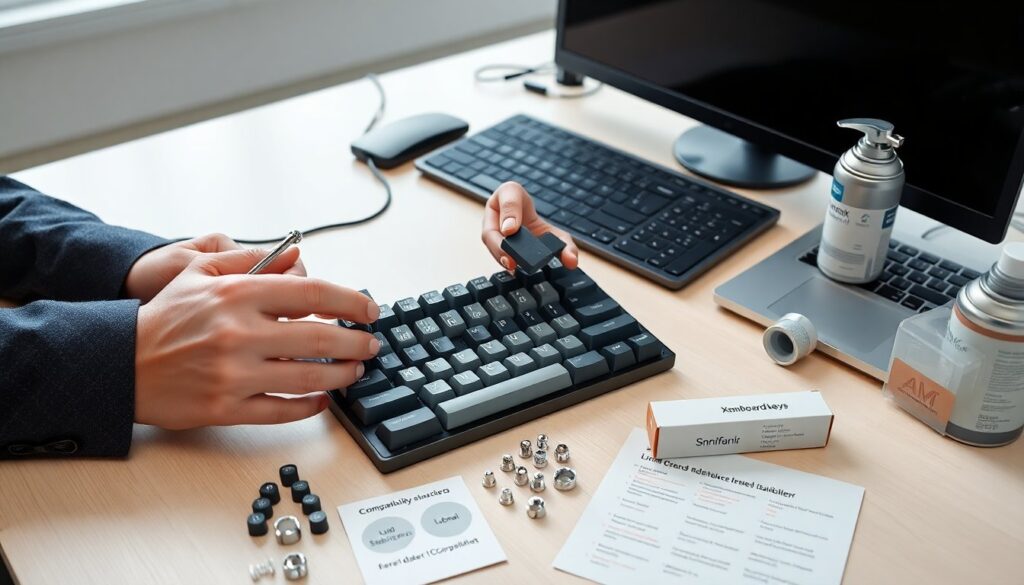
Gmnfung XenaBoard keys provide a durable and affordable option for mechanical keyboards. Readers will learn how to check compatibility, remove and install keycaps, and customize keys for long life. The guide uses clear steps and practical tips. It assumes basic keyboard experience. It aims to help readers make choices and avoid common mistakes with gmnfung xenaboard keys.
Key Takeaways
- Gmnfung XenaBoard keys fit popular MX-style mechanical keyboard switches, so confirm your keyboard’s stem type and layout before buying.
- Use the right keycap puller and remove keys carefully to avoid damaging switches or stabilizers when installing or replacing Gmnfung XenaBoard keys.
- Choose keycap materials like PBT for durability and dye-sublimated legends for longer-lasting designs with Gmnfung XenaBoard keys.
- Regular cleaning and adding foam inside the keyboard case can enhance the feel and sound quality of your Gmnfung XenaBoard mechanical keyboard.
- If keys fail to register or feel loose after installation, test switches and keycaps, reseat or repair hardware, and contact sellers if needed.
- Customize layouts with firmware tools like QMK or VIA and keep backup configs to optimize Gmnfung XenaBoard key performance and usability.
What Gmnfung XenaBoard Keys Are And How To Check Compatibility
Gmnfung XenaBoard keys refer to keycap sets sold under the Gmnfung brand for XenaBoard-style layouts. They fit common MX-style switches and some low-profile stems. Buyers must verify stem type and layout size before purchase. They should note ANSI, ISO, 60%, TKL, and full-size formats.
To check compatibility, users inspect the keyboard switch stem. They look for a cross-shaped stem for MX-style switches. They confirm the spacebar and modifier sizes. They measure key spacing when the keyboard uses nonstandard stabilizers.
Online product pages list supported layouts and stem types. Buyers compare those lists to the keyboard model. They read product photos to confirm stem shape and mounting. They read reviews to confirm real-world fit.
If a keyboard uses low-profile or proprietary stems, gmnfung xenaboard keys may not fit. They consult the keyboard manual or the manufacturer support page. They contact sellers with photos when they need direct confirmation.
Some sellers include adapter pieces or alternate stems. Buyers check the package content before they buy. They prefer sellers with clear return policies in case gmnfung xenaboard keys fail to fit.
How To Remove, Install, And Replace XenaBoard Keycaps Safely
Users remove keycaps with a proper keycap puller. They choose a wire puller for tight fits and a plastic puller for fragile caps. They grip the keycap and pull straight up. They avoid twisting to protect the switch stem.
They remove large keys like the spacebar slowly. They support the stabilizer with their free hand. They ease each side up evenly to avoid bending the stabilizer wires.
To install gmnfung xenaboard keys, they align the keycap stem to the switch stem. They press down evenly until the cap seats. They test the key for full travel and a clean return.
For spacebars and other stabilized keys, they seat the stabilizer inserts first. They clip any included stabilizer housings into the keycap if the set requires them. They test the stabilizer action before they proceed to the rest of the board.
When they replace keycaps, they work in small sections. They change alpha keys first, then modifiers, then stabilized keys. They clean switch tops with a soft brush or compressed air before they install new caps. They avoid liquid cleaners near switches.
If a cap feels loose, they swap it with a nearby cap to confirm the problem. If the cap still fits loosely, they contact the seller. They keep old keycaps until they confirm full satisfaction with gmnfung xenaboard keys.
Customize, Maintain, And Troubleshoot XenaBoard Keys For Best Performance
Users customize gmnfung xenaboard keys by choosing profiles and materials. They choose sculpted or flat profiles for typing feel. They select ABS for lower cost and PBT for higher durability. They note that dye-sublimated legends last longer on PBT than on ABS.
They maintain keycaps with regular cleaning. They remove caps and wash them in warm soapy water. They dry caps fully before reinstalling. They avoid dishwashers and high heat. They clean between keys with a soft brush and compressed air.
To improve sound and feel, they add foam or padding inside the case. They place thin foam under the PCB or between the plate and case. They test different foam densities to find the preferred sound. They replace stabilizers with lubed, clipped units for a quieter, smoother action.
When a key fails to register after swapping gmnfung xenaboard keys, they test the switch with a known-good keycap. They reconnect the keyboard and test with a key tester app. They reseat the switch or reflow the solder if they find a hardware fault and they have soldering skills.
If legends wear quickly, users switch to PBT or consider double-shot keycaps. They choose laser-etched or dye-sublimated legends for long use. They avoid heavy cleaners that remove legend ink.
If they need a custom layout, they map keys in the keyboard firmware. They use tools like QMK or VIA when the keyboard supports them. They save backup configs before they flash firmware.
When they buy replacement gmnfung xenaboard keys, they read seller return policies. They keep order records and photos. They contact support promptly for defects. They consider local keyboard communities for trade or advice on rare layout parts.
These steps help users get reliable performance and longer life from gmnfung xenaboard keys.