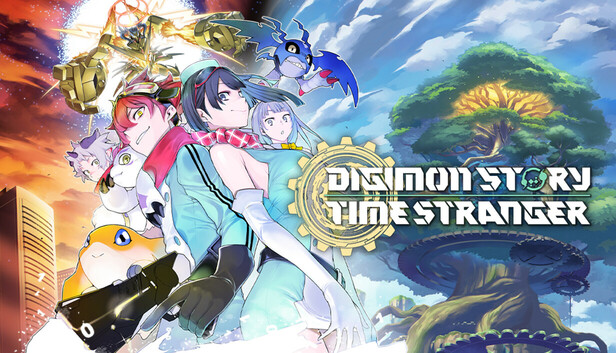
Digimon Story Time Stranger exemplifies the enduring appeal of mascots in 2025 games, combining emotional storytelling, strategy, and nostalgia in one of the franchise’s strongest RPG entries.
Mascots have always played a defining role in gaming — from classic icons like Pikachu and Gatomon (or Tailmon) to the digital creatures of the Digimon franchise. In 2025, that legacy remained as strong as ever. Across genres, players continued to be drawn to games where companionship, personality, and evolution take center stage. Among the year’s standout releases, Digimon Story: Time Stranger stood out as a polished and emotionally grounded example of how character-driven design keeps mascots at the heart of modern gaming.
Developed by Bandai Namco, Time Stranger is the newest entry in the Digimon Story series and builds upon the foundation established by Cyber Sleuth and Hacker’s Memory. The game opens with an intense sequence: a secret agent protagonist witnesses a catastrophic event known as the Shinjuku Inferno, where Digimon unleashes chaos in Tokyo. Transported eight years into the past, the protagonist must uncover the mystery behind the disaster and prevent its recurrence.
The story’s emotional focus revolves around Inori Misono, a determined young woman, and Aegiomon, a humanoid Digimon who has lost his memory. Their evolving partnership serves as the emotional core of the narrative, exploring trust and sacrifice through the lens of human–mascot connection. While the silent protagonist limits some emotional depth, Inori and Aegiomon’s journey delivers genuine weight and makes the story resonate far beyond its premise.
Gameplay in Time Stranger refines the classic turn-based combat the series is known for. With over 450 Digimon available, each featuring distinct attacks and animations, the battle system rewards tactical planning through layered elemental and attribute mechanics. The rock-paper-scissors structure between Virus, Vaccine, and Data types combines with elemental strengths like Fire and Water to create complex but intuitive strategies.
The signature Digivolution system remains one of the franchise’s strongest features. Players can evolve and de-evolve Digimon through branching paths based on stats, rank, and personality — allowing for experimentation and a sense of ownership over team composition. Meanwhile, the Digifarm returns as a strategic management tool where Digimon can train independently, develop personalities, and even send text messages to the player. This layer of interactivity reinforces the emotional connection central to the experience.
Visually, Time Stranger is one of the series’ most polished installments. The Digital World offers distinct environments — from the crystalline beaches of the Abyss to the mechanical architecture of the Gear Forest. The Olympus XII, a pantheon of deity-like Digimon inspired by Roman mythology, adds humor and personality to the campaign. Bacchusmon, for instance, embodies gluttonous laziness, while Vulcanusmon, the god of fire, collects action figures — small, playful details that humanize these larger-than-life characters.
Mascots in 2025 – From Casinos to RPGs
Beyond the RPG scene, 2025 showed that mascot-driven concepts remain a dominant trend across gaming. Data from a Brazilian casino for August 2025 indicates that mascot-themed titles also perform strongly in the iGaming space.
Games such as Fortune Tiger, Fortune Rabbit, and Fortune Dragon by Pocket Games Soft topped the charts with over 25% engagement each. This popularity can be attributed to the emotional familiarity and visual appeal of recognizable figures — a reflection of how mascots, whether digital or symbolic, continue to attract audiences worldwide.

While other series like Pokémon, Cassette Beasts, and Palworld continue to expand the mascot-based genre, Digimon Story: Time Stranger shows that there’s still room for meaningful storytelling and innovation within it. Its mix of nostalgia, strategic combat, and emotional writing make it one of the most refined Digimon games to date — not because it reinvents the genre, but because it understands what makes mascots timeless.
Time Stranger doesn’t lead a new movement; it reminds players why mascots endure. Whether in RPGs, mobile titles, or online experiences, these characters continue to bridge nostalgia and novelty — offering companionship, creativity, and a sense of connection that remained at the heart of gaming in 2025.